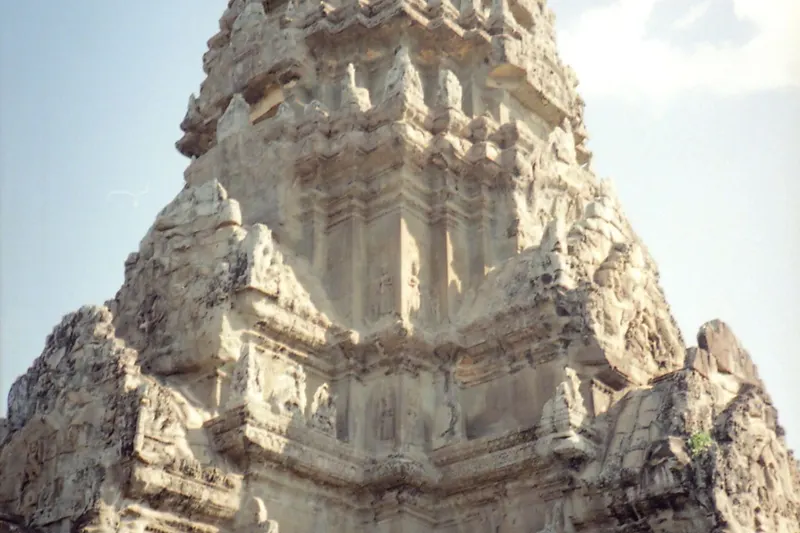
Angkor Wat, Cambodia
Keep the idea in your list, then add your own steps, notes, and updates as it takes shape.
Begin with the whole plan
Before entering, pause long enough to see the temple as a composition. UNESCO describes Angkor as a large archaeological landscape of successive Khmer capitals, hydraulic works and communication routes, not an isolated monument. Angkor Wat’s layered enclosure and rising central towers make more sense when you notice the relationship between an ordered approach, surrounding space and a high central focus.
Choose one visual question for the first circuit: how does the design move your attention inward? Track the shift from open approach to enclosed gallery, then toward the central sanctuary. You need not name every architectural term. A small sketch of rectangles, thresholds and towers can preserve the spatial logic better than a rapid series of phone photographs.
Let the galleries slow you down
The bas-reliefs are not wallpaper. Pick one gallery wall and follow a continuous stretch at walking pace. Notice how carved figures, repeated bodies and landscape details create movement across a long stone surface. Stop at corners and doorways, where the composition turns or changes. Ask what is repeated, what breaks the pattern, and where the carving asks your eye to look next.
Do not try to identify every figure from memory or an unverified guide. If a scene is unfamiliar, describe what you can actually see: procession, combat, courtly grouping, animals, or a shift in scale. A knowledgeable local guide or a reliable interpretive publication can add names and context. Your own careful observation remains useful even when an identification is uncertain.
Compare structure and carving
After looking at a relief, step back to the building. Angkor includes temple forms closely tied to their setting and symbolic meaning, as UNESCO notes. Compare one doorway, tower or terrace with a nearby carved panel: does the masonry frame the image, repeat its shapes, or lead you toward a ritual space? Look for transitions between exterior and interior rather than treating each sculpture as a standalone object.
A practical note-taking format is “feature, location, question.” For example: “long gallery, north side, figures move in one direction—where does the narrative turn?” This records evidence without pretending to settle its interpretation. Photograph a wider context frame before a detail, if photography is permitted there, so you remember where the detail belongs.
Visit with respect for a living place
Angkor is not an abandoned theme set. UNESCO describes it as a living heritage landscape with villages and continuing cultural practices. Follow current official visitor guidance and signs on site; keep a quiet, observant manner where people are worshipping, and treat local residents as people going about their lives rather than as part of a display. If a site rule is unclear, ask an authorized guide or staff member before acting.
Do not climb for a better photograph or touch reliefs to trace a line. Fragile stone and crowded steps make those gestures costly. If a stairway or passage is closed, choose the marked alternative. Treat a person praying as a participant in a living tradition, not a prop; ask before taking identifiable portraits and accept a no without discussion.
Make one visit legible afterward
A satisfying focused visit can be modest: one broad view of the temple plan, one gallery followed carefully, and one comparison between a carved detail and the architecture around it. Leave time to sit and review your notes outside active worship spaces. Write down one question you would like a specialist to answer, rather than collecting speculative facts from captions or social posts.
For planning, consult current official visitor information for the map, permitted access, ticketing and site conditions, then follow on-site signs and staff guidance. UNESCO’s heritage page provides historical and cultural context, not an operating schedule. Give yourself a focused question—how does the design guide attention inward, or how does a carved panel relate to its gallery—and let that guide the pace of your visit.
Sources and further reading
- Angkor
UNESCO World Heritage Centre · Supports Angkor’s broad archaeological landscape, successive Khmer capitals, symbolic architecture, relief-rich monuments, and living communities.