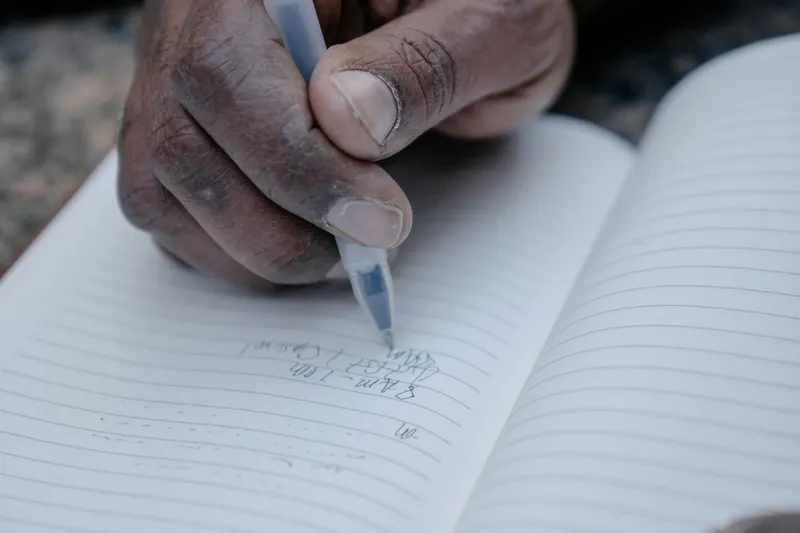
Write your obituary the way you would want it read
Keep the idea in your list, then add your own steps, notes, and updates as it takes shape.
Borrow the form, change the audience
A conventional obituary has a practical job: it tells readers someone has died and gives a few details about their life and service. The Library of Congress describes a common American newspaper structure that combines an announcement, biography, family information, and funeral arrangements. For this exercise, keep the biographical center and set aside the announcement and service details. You are not predicting when or how you will die; you are asking what a truthful account of your living would contain.
Write in third person if that creates useful distance, but mark it clearly as a draft. Start with a plain sentence such as, “They made room for people who were new.” Then ask what specific scene could support that sentence. A value becomes more revealing when attached to a choice rather than an adjective.
Choose scenes, not a trophy shelf
List a dozen moments someone close to you might actually remember: a meal you kept making, a time you changed your mind, a friendship maintained across distance, or work you did quietly when nobody was watching. Include ordinary scenes alongside public achievements. If every paragraph sounds like a résumé, ask what the résumé leaves out: how you treated coworkers, whether you were curious, what you repaired, whom you called back.
Try three short passages: what you cared about, how you showed it, and what people could count on you for. Use specific verbs—taught, listened, hosted, mended, organized—instead of broad praise. The point is not to claim you have already lived perfectly; it is to notice which descriptions feel earned and which feel aspirational.
Keep people and private facts in mind
This is a private reflection, so you can include unfinished hopes without publishing names or sensitive details. Avoid writing other people's private stories as if they were yours to disclose. If you later share the draft, ask before naming living people or describing difficult events. You might write “a sibling who showed me how to start over” rather than exposing a family conflict.
A future obituary is not a legal document and cannot replace current arrangements, a will, or instructions for people who may need them. Keep those tasks in their proper place. This page is for meaning and voice; practical end-of-life planning should be handled separately with qualified local help where needed.
Read it aloud for the awkward gaps
Read the draft once without editing. Circle any sentence that sounds impressive but unlike your speech. Underline details that feel vivid. Then ask a trusted person one narrow question: “What part feels most like me, and what important part is missing?” You do not need to accept every suggestion; the response can show what you communicate unintentionally.
Notice the gap between the person described and today's calendar. If you wrote about being present for friends but routinely postpone calls, do not punish yourself. Pick one modest action that makes the description more plausible this month: schedule a walk, send the overdue note, or protect an hour for the craft you say matters.
Leave the draft open-ended
Date the page and put it away for a week. When you return, cross out anything that feels borrowed from a tribute template. Add one detail only a friend would recognize. Keep a second section called “still becoming” for qualities you want to practice rather than claim. That distinction keeps this exercise honest: an obituary-shaped reflection can point toward a life, but it cannot certify that life in advance.
Your next step is to write one paragraph about a small, recent choice that supports the person you hope to be remembered as.
Sources and further reading
- Mourn Not! A History of Obituaries in American Newspapers
Library of Congress · Provides a historical example of common American newspaper obituary elements; the article adapts only the biographical reflection aspect.