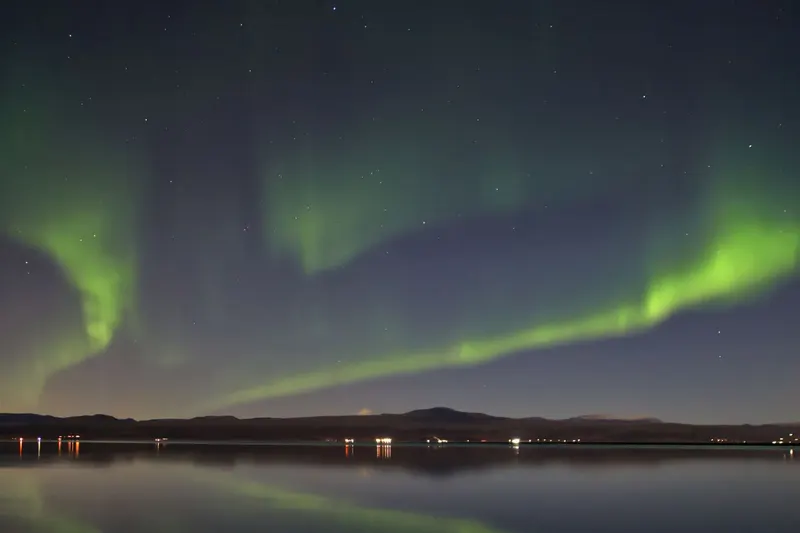
Iceland: fire, ice, and the aurora
Keep the idea in your list, then add your own steps, notes, and updates as it takes shape.
Choose a region before chasing the lights
Iceland’s landscapes are not one compact day trip. Choose whether you want the South Coast’s waterfalls and glaciers, a Reykjavík-based Golden Circle visit, or a longer loop through the north and east. Name one geological feature you want to understand rather than attempting every waterfall, crater and lagoon in a short stay.
Aurora viewing is an evening possibility, not the itinerary’s only purpose. Visit Iceland says darkness and a clear or partly clear sky are needed, and describes a broad season from late August to late April. Clouds, daylight and conditions can defeat a plan. Choose daytime activities you would still value if no lights appear.
Use a base-and-spoke plan when time is short
For a shorter trip, pick a region and base that keeps several chosen sites within a manageable day. A Reykjavík base can support nearby day trips; a South Coast route may involve overnight stops. The right choice depends on current transport, daylight and time available. Compare the actual map and return distances before deciding that a site is “nearby.”
If you plan a self-drive route, check current conditions on SafeTravel, the Icelandic Met Office and the road authority before leaving and again during the day. Official visitor guidance warns that weather and nature conditions change and that new lava can remain hot and unstable beneath a surface that looks solid. Do not approach a recent eruption site without following official local access rules.
Let geology dictate the kind of stop
Choose the geological stop by the landscape and route you want, not by a generic label such as “lava.” In southwest Iceland, the Þingvellir National Park guide maps Almannagjá, a rift at a plate boundary, together with Öxarárfoss in Stekkjargjá and the water-filled Flosagjá fissure. This is a compact rift-and-water comparison for a Þingvellir visit. Dimmuborgir, by Lake Mývatn in north-east Iceland, is different: the Environment Agency describes lava stacks left by an emptied lava lake. Choose Dimmuborgir if its unusual lava formations are the subject of the trip; its northern location makes it a separate regional plan from a short southwest stay.
Both sources describe protected landscapes, not guaranteed year-round access. The Environment Agency says snow, ice and slush can limit or prevent walking at Dimmuborgir and instructs visitors to stay on marked trails. At Þingvellir, use the park’s current visitor map and follow signs rather than treating a diagram as a live condition report. Check roads, weather and local access on the day; do not leave paths, enter closed ground or approach recent lava.
Make the aurora plan a flexible evening
Check cloud cover and darkness for your actual location, then choose a legal public viewing area with safe parking and a straightforward return. Visit Iceland advises patience and checking the sky conditions; its official page also notes that auroras can appear across Iceland. Do not assume a distant dark spot improves odds enough to justify driving when weather is poor.
If you join a tour, confirm what happens if the outing is cancelled or no aurora appears. Choose a warm alternative for the same evening and protect sleep before a long drive. Keep cameras secondary: use settings at a safe stationary location, never walk into a road or toward a cliff while looking at a screen.
Keep a plan B and a precise memory
Build one weather-flexible day into the itinerary. If the road closes or wind makes a drive unwise, visit a local museum, geothermal pool or town activity instead of pushing onward. Route safety is a local, current question; a tourism article cannot replace live conditions. Follow closures and return another time if a site is inaccessible.
Record what you actually saw: the region, weather, route and any geological feature you noticed. Do not describe an aurora as guaranteed or claim an eruption is active based on old travel writing. Iceland’s fire-and-ice character is still present in landscapes and interpretation even on a cloudy night, and a flexible trip gives you room to learn without forcing conditions.
Sources and further reading
- The Auroras
Business Iceland / Visit Iceland · The official guide describes aurora viewing as needing darkness and clear or partly clear skies and gives late August through late April as a broad season; it cannot promise visibility.
- SafeTravel: Everything you need to know for a safe trip to Iceland
Business Iceland / Visit Iceland · The guide directs visitors to live SafeTravel weather and travel conditions, warns about unstable new lava and recommends staying on marked paths and heeding local signs.
- Dimmuborgir
Environment Agency of Iceland · Supports Dimmuborgir’s north-east Iceland/Lake Mývatn location, lava-lake origin and stacks, and the snow/ice/slush and marked-trail access caveats.
- Þingvellir visitor map and main area
Þingvellir National Park · Maps the main path and names Almannagjá, Öxarárfoss in Stekkjargjá and Flosagjá; its geological/site diagram is not a live access or weather report.