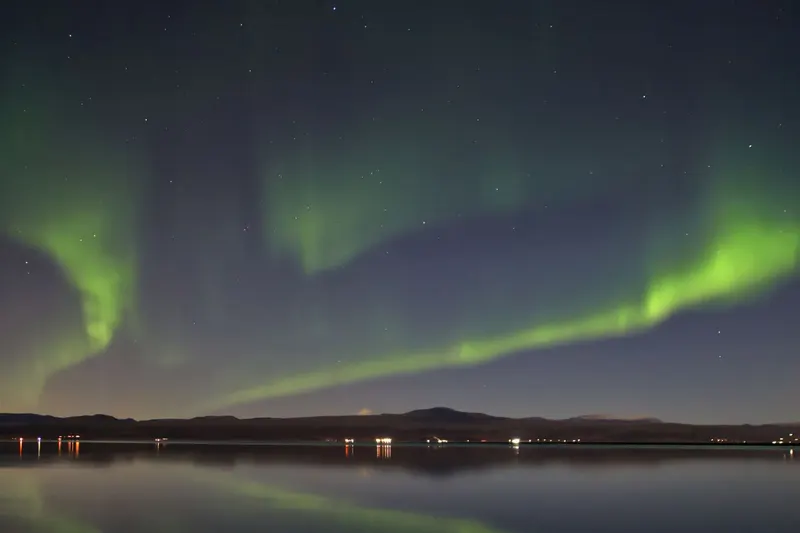
See the Northern Lights in Iceland or Norway
Keep the idea in your list, then add your own steps, notes, and updates as it takes shape.
Make the trip about a place as well as a sky
An aurora is a natural event, so a trip can create chances to see it but cannot schedule it. Choose Iceland or Norway for more than a nightly chase: scenery, local museums, food, or a winter activity you would still enjoy if clouds hide the sky. That makes a quiet evening part of the trip rather than a failed promise.
Pick a base that suits your daytime plan and your willingness to travel after dark. If you hope to move away from city lights, leave driving decisions to current road and weather advice; a clear patch on a map does not mean a remote road is suitable. A local guide can help interpret conditions without guaranteeing a sighting.
Read the Iceland forecast as two questions
The Icelandic Meteorological Office presents a cloud forecast and a separate auroral activity forecast. Its page says the aurora needs dark and partly clear skies, marks cloud on a map, and shows activity at midnight on a 0-to-9 scale. A promising activity number does not clear the clouds at the spot where you plan to stand.
The same page warns that its sunset, darkness, sunrise, and moonrise timings are for Reykjavík. If you are elsewhere in Iceland, check local darkness and weather rather than carrying Reykjavík’s times across the island. For Norway, use the national or regional forecast service relevant to your destination and read the map legend on that product.
Build more than one viewing opportunity
If aurora is a major goal, spread the chance across several nights when your schedule allows. Keep a flexible evening in each cluster instead of booking a different late event every night. Forecasts are useful for deciding when to look, but a single prediction is not a promise that lights will appear where you are.
Plan a short, comfortable viewing session and decide in advance what would make you head indoors: worsening weather, unsafe road conditions, or fatigue. Dress for waiting, keep your phone charged, and choose a legal public viewing place rather than stopping on a roadside shoulder or entering private land.
Choose whether to go out independently or with a guide
A guide may reduce the work of watching cloud, travel, and local conditions; independent viewing gives you more control over pace. Compare the operator’s actual cancellation, pickup, and rescheduling terms before booking. Avoid any claim that a tour guarantees the aurora. If you go alone, share your plan and check current local safety information before travelling outside town.
On the forecast page, inspect the selected date and time rather than assuming the first panel describes the whole evening. Keep the scale and cloud map distinct in your notes. A simple decision can be enough: stay local if cloud covers the route, or choose a permitted nearby place if local weather and transport guidance support it.
Save a meaningful fallback
Choose one plan for a fully cloudy evening: a warm meal, indoor cultural event, or an early night before a daytime walk. If the forecast changes, you can switch without searching from a car park at midnight. Keep the next morning light; repeated late nights are less enjoyable when they erode the rest of your trip.
Your next action is to select a base with at least two non-aurora activities you genuinely want, then bookmark the official local cloud and space-weather forecasts. Use them to choose a viewing window, not to promise yourself a particular color or display.
Sources and further reading
- Aurora forecast for Iceland
Icelandic Meteorological Office · Supports the distinction between the cloud map, midnight activity scale, darkness requirement, and Reykjavík-only sun and moon times.